
Digital Nomad Visas in Southeast Asia: Your 2026 Guide
 Claude
 Perplexity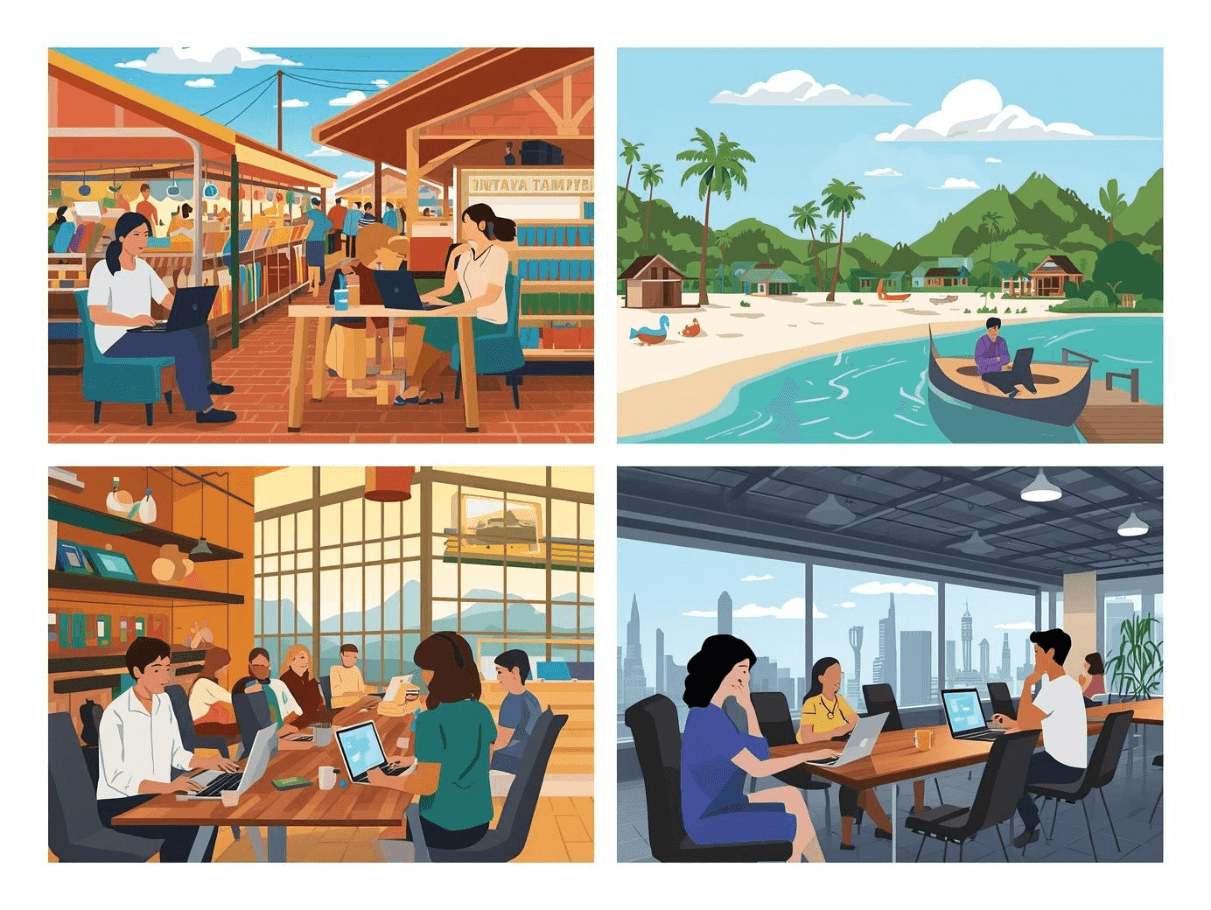
Southeast Asia is having a moment. And I don't mean the beaches (though, yes, those too). I mean that governments across the region are literally competing for your remote work business.
- Thailand launched its DTV in 2024.
- Malaysia rolled out DE Rantau.
- Indonesia doubled down on E33G.
- Even Sri Lanka and the Philippines jumped in.
It's like a digital nomad arms race, and honestly?
The remote workers are winning.
If you've been thinking about working from Southeast Asia long-term, the timing has never been better.
But with so many options, how do you actually pick? That's what this guide is for.
Let's break down every major digital nomad visa in SEA, what they cost, what they require, and—most importantly—which one actually makes sense for your situation.
Thailand: Destination Thailand Visa (DTV) — The Flexible Favorite

The Destination Thailand Visa (DTV), launched in September 2024, is probably the most flexible long-term visa in the region.
Here's why people are buzzing about it.
The basics: Five-year validity, 180 days per entry, unlimited re-entry, and you can use it to bounce around Southeast Asia and come back whenever. It's like having a permanent holiday ticket with a really long expiration date.
What you need: A bank balance of 500,000 Thai Baht (roughly US$15,000). That's it. No income requirement, no employment letter, no questions asked. You just need to show the money exists. The balance requirement is refreshed periodically, but it's incredibly straightforward compared to other visas.
The cost: Around US$320 for the initial visa. Renewal within Thailand is cheaper.
Who should get it: Anyone who wants a long-term SEA base but values flexibility. Traders, investors, consultants, anyone whose income isn't easy to document. Plus, if you're the type who wants to spend two months in Thailand, one in Vietnam, and pop back to Thailand again, this visa lets you do that without visa runs.
Malaysia: DE Rantau Nomad Pass — The Tech Worker's Sweet Spot
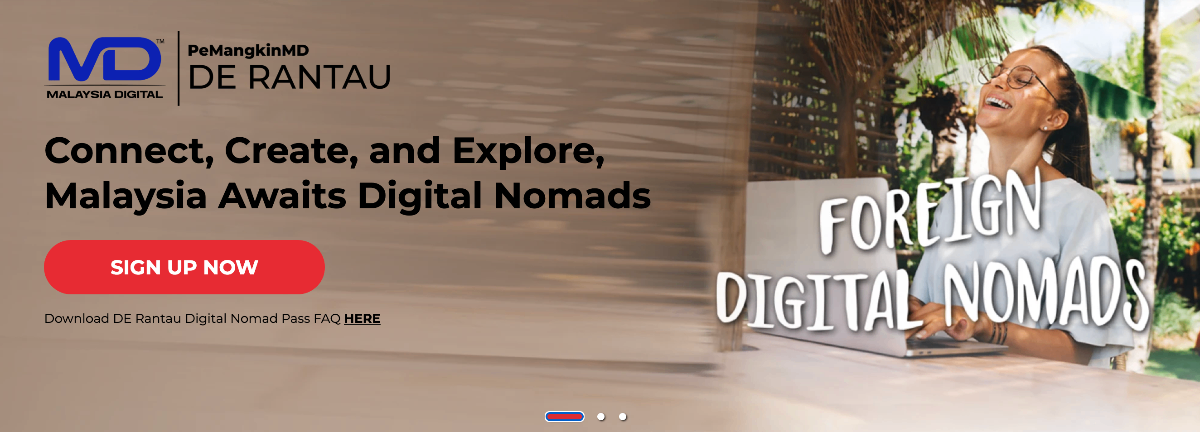
Malaysia is quietly building something smart here. The DE Rantau Nomad Pass is specifically designed for remote workers, and the income requirements are refreshingly honest about what different fields actually earn.
The basics: Up to two years total stay (initial 3-12 months, then renewal for another 12 months). You can extend as long as you meet requirements.
What you need: An annual income of US$24,000 for tech workers, or US$60,000 for everyone else. Yes, there's a tech discount. This visa was literally designed to poach talent from Singapore and Hong Kong, so they made the bar lower for coders.
The cost: MYR 1,000 (about US$215) annual fee, plus MYR 500 per dependent.
Why this matters: Kuala Lumpur has one of the best infrastructure, tons of coworking spaces, and everyone speaks English. The cost of living is reasonable, the food is spectacular, and there's a real remote work community building there. If you're a software engineer or tech professional, you're basically looking at a visa that says "we want you here."
Who should get it: Tech workers first (that income bar is too good to pass up). But honestly, anyone working remotely who makes decent income. The infrastructure and community make it worth the application effort.
Indonesia: Remote Worker Visa (E33G) — The Long Game
Indonesia gets a lot right here. The E33G is the visa you get if you want to stay put for the long term without a crazy income requirement.
The basics: One-year validity, but renewable up to five times. That means potentially six years in Indonesia on the same visa framework. It's the longest possible runway if you're really settling in.
What you need: US$60,000 annual income (less demanding than Malaysia's non-tech option). A bank balance of US$2,000. Various documentation and background checks.
The cost: Around US$315 in visa fees for the initial application. Renewals run cheaper.
The alternative: If the E33G feels bureaucratic, there's the B211A social visit visa. It's 60 days, renewable twice, so you can string together six months of continuous stays. It's the backpacker's loophole, and it works if you don't mind the admin overhead.
Why Bali though: Bali isn't where everyone should be, but if you're going to do Indonesia long-term, it's where the infrastructure is. Coworking spaces, cafes with solid WiFi, and a massive expat community. Ubud specifically has become this weird little tech hub that nobody expected.
Who should get it: Anyone serious about staying in Indonesia for a year or more. The ability to renew multiple times is a huge safety net.
Philippines: Digital Nomad Visa — The New Player [PENDING]
The Philippines announced its Digital Nomad Visa via Executive Order 86 in April 2025, and it's exciting for one reason: no foreign income tax.
The basics: Up to two years stay, and the government is explicitly not taxing your foreign income. This is a huge differentiator from every other country in the region.
The reality check: As of March 2026, the visa is still being rolled out. There's no confirmed application process yet, and official details are sparse. Government websites have pages about it, but the actual logistics are still being worked out. If you're planning to apply, expect some uncertainty and check official channels directly.
What we expect: Income requirements haven't been formally announced, but based on similar programs, expect something in the US$24,000-40,000 range.
The infrastructure story: Internet in Manila and Cebu has been improving over the years. It's not Thailand-level reliability yet, but it's getting there. If you're used to Southeast Asian internet, you'll be fine.
Who should wait for it: Tech workers and those early-stage startups who want a two-year runway without foreign income tax. Once the application process stabilizes, this could be a game-changer.
Vietnam: The Golden Visa — For the Serious Investor
Vietnam's Golden Visa is different compared to other digital nomad visa. You're not applying as a remote worker; you're applying as a skilled professional or investor.
The skilled professional route: Five-year visa for people with valuable expertise in tech, finance, healthcare, etc. You need an employer willing to sponsor you.
The investor route: A ten-year visa is under review (as of 2026) for investors putting money into Vietnamese companies. It's the play if you're actually building something there.
Who should look here: Entrepreneurs and investors. If you're just a remote worker, the other visas are more relevant and simple.
Sri Lanka: The Newest Entrant — Budget Option
Sri Lanka just launched its digital nomad visa, and it's the cheapest option by income requirement. You need to show a US$2,000 monthly income (or US$24,000 annually), which is basically the same as Malaysia's tech tier but with lower overall cost of living.
Colombo has good internet, improving coworking infrastructure, and your money goes incredibly far. If you're optimizing for budget, this is worth serious consideration. Just verify the latest details with official sources before applying.
Quick Comparison: Side-by-Side Breakdown
| Country | Visa Name | Duration | Income Requirement | Cost (USD) | Tax on Foreign Income |
|---|---|---|---|---|---|
| Thailand | DTV | 5 years (180 days per entry) | None (US$15k bank balance) | $320 | No |
| Malaysia | DE Rantau | 2 years (renewable) | $24k (tech) / $60k (other) | $215/year | No |
| Indonesia | E33G | 1 year (renewable 5x) | $60k | $315 | No |
| Philippines | Digital Nomad | 2 years (pending rollout) | TBD (~$24-40k expected) | TBD | No (key feature) |
| Vietnam | Golden Visa | 5-10 years | Employer sponsor required | Varies | Depends on status |
| Sri Lanka | Digital Nomad | 1-2 years | $24k annually | Varies | No |
How to Actually Choose: The Opinionated Guide
Okay, spreadsheets are useful, but let's get real. Here's how I'd think about it:
Best Overall: Thailand DTV
If you can't decide, go with Thailand.
The flexibility is unmatched.
You get five years, unlimited re-entry, and a low financial bar (just the bank balance, no income requirement). Bangkok, Chiang Mai, and Phuket all have solid digital nomad infrastructure.
Plus, Thai visas don't ask a million questions.
Best for Tech Workers: Malaysia DE Rantau
That US$24k income bar for developers? It's a gift.
Malaysia is also criminally underrated by digital nomads.
Kuala Lumpur is modern, English-friendly, incredible food, and a tight remote work community.
If you're a software engineer, you're basically leaving money on the table by not exploring this.
Best for Long-Term Settlers: Indonesia E33G
You want to stay somewhere for years without constantly renewing?
E33G lets you renew five times, giving you potentially six years in Indonesia. It's the stability play.
Bali's coworking scene is mature.
Ubud, Seminyak, Canggu—all solid options with actual tech communities.
Best Value: Sri Lanka or Malaysia
If cost of living is the priority, Sri Lanka edges out competitors on pure affordability. But Malaysia's tech tier rate (US$24k) is hard to beat if that's your income level, especially with Kuala Lumpur's infrastructure.
Best for Tax Optimization: Philippines (when it stabilizes)
No foreign income tax for two years is a meaningful financial advantage. Watch the application process rollout and jump in when it's clear.
This could actually be the smarter long-term play than it looks right now.
So, what's next?
Don't just stop after reading this blog post Here's what you actually do:
Step 1: Pick two visas that align with your requirements and expectations (income level, how long you want to stay, how much you like bureaucracy).
Step 2: Visit the official immigration ministry websites for those countries. As the information changes make sure to stay updated.
Step 3: Connect with people already on those visas. Reddit communities, Facebook groups, coworking spaces—actual humans give you the real story about processing times and hidden costs.
Step 4: If you're not sure your remote work setup qualifies or you need to formalize your income documentation, Kerja-Remote has dozens of remote positions where you're directly employed.
That makes visa applications way simpler. No ambiguity, no "is freelancing really work?" questions.
FAQ: Your Burning Questions Answered
Can I apply for multiple digital nomad visas at the same time?
Technically, yes. But practically, no. Most countries want you picking one. Apply for one, establish yourself, and plan to move later if you want. The visas are designed to be your "home base" for a period, not simultaneous passes.
What happens if my income drops mid-visa?
Most countries don't audit you constantly. Thailand (DTV) doesn't have income requirements, so you're safe. For the others, renewal is where they might check. If your income dips, focus on documentation showing you can meet the requirement at that point. Many countries are lenient if you're close and have been compliant.
Is six months on the B211A "visa run" strategy viable for long-term living?
Yes, but it's exhausting. You have to leave Indonesia and come back every two months. For a year or more, the E33G is way less stressful. The visa run thing is a Band-Aid, not a strategy.
Do I need travel insurance for these visas?
Not required by law, but absolutely recommended. International health insurance is cheap and covers you across Southeast Asia. A serious illness or accident without insurance? That's a nightmare scenario. Get covered.
Can my partner and I apply together?
Depends on the visa. Most have dependent add-ons (Malaysia explicitly charges extra for dependents). You'd both apply separately under the same visa type. Check official requirements for your specific country.
What's the internet situation really like?
Thailand, Malaysia, and Philippines urban areas are solid. Indonesia is hit-or-miss depending on where you are; Bali is better than you'd think. Sri Lanka and Vietnam are improving. If you're remote working full-time, test the connection before committing. Consider a local backup (phone hotspot) everywhere.
The Real Bottom Line
Southeast Asia wants you here.
These visas prove it.
The region is actively competing for remote workers—not just tourists, but actual people building careers and companies from here. That's new, and it's valuable.
Pick the visa that matches your requirements:
If you want flexibility, go Thailand.
If you want stability and good infrastructure, go Malaysia.
If you want to stay put for years, go Indonesia.
If you're a builder and an investor, Vietnam's your play.
And here's the thing: If you're serious about remote work, make sure to subscribe to our newsletter.
You'll find jobs where you can work from anywhere in the region, companies that get remote work, and a community of people doing exactly what you're trying to do.
Southeast Asia isn't just a vacation destination anymore.
It's where remote work happens.
Pick your visa, pack your laptop, and get going.

Remote jobs, straight
to your inbox
Handpicked APAC opportunities every week.
Early access. Zero spam.